
Broken iPhone Bulk Buyback: How We Evaluate Used and Damaged Lots
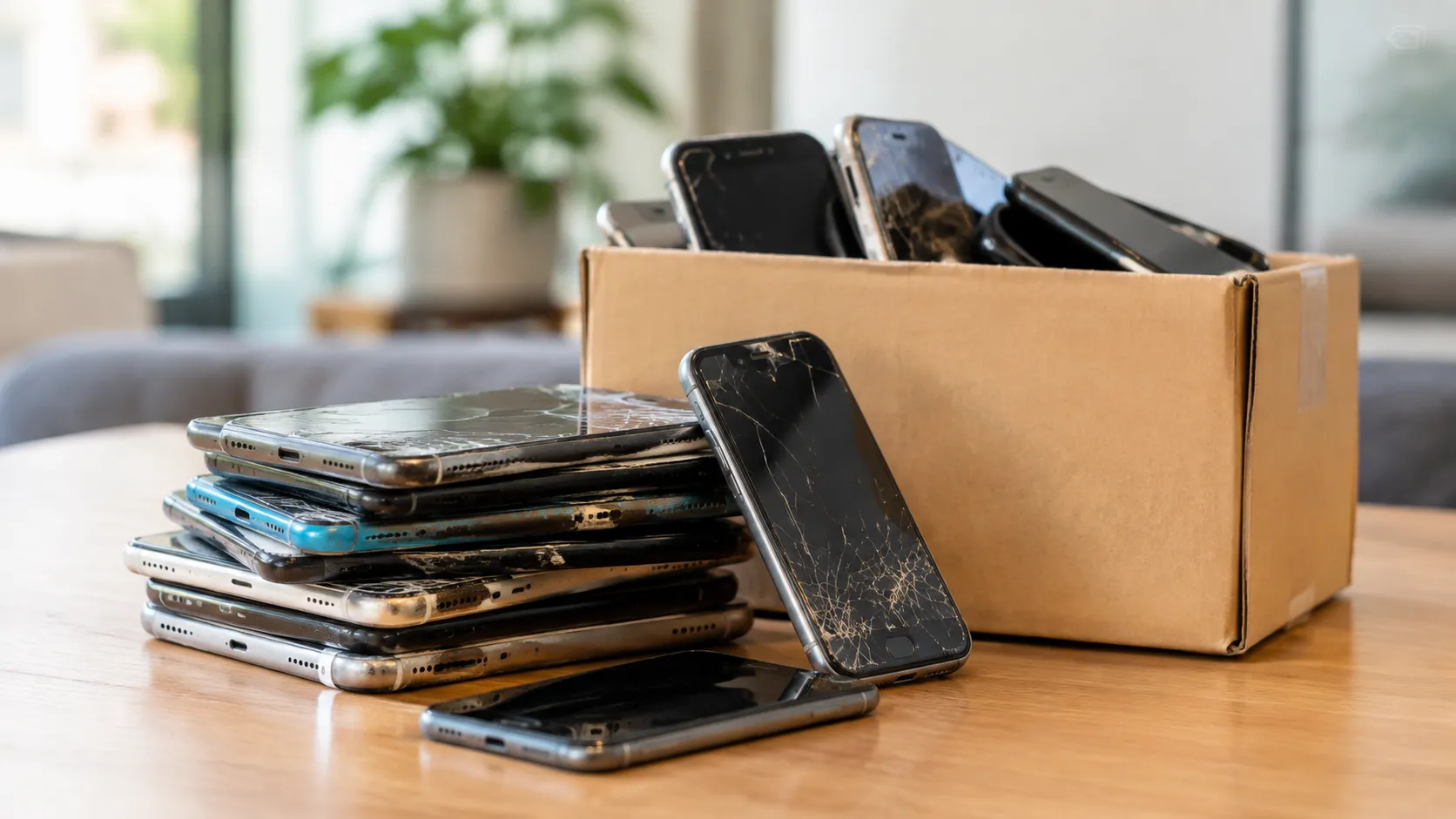
Sitting on a stack of cracked screens, dead logic boards, or enterprise surplus?
Turning that damaged inventory into serious cash shouldn’t be a headache.
The truth is, finding the right broken iPhone bulk buyback partner can unlock thousands of dollars in hidden revenue—if you know how grading and bulk pricing actually work.
In this guide, you’ll learn how to get the absolute highest payout for your broken Apple devices, avoid common vendor traps, and streamline your entire liquidation process.
Let’s dive right in.
Key Factors Determining Broken iPhone Bulk Value
In our broken iPhone bulk buyback operations, payout rates reflect component recovery yield. Every damaged lot is audited using five primary valuation benchmarks.
Display Condition: Cracked Glass vs. Defective Panel
Display assemblies represent the highest recoverable margin on salvage inventory. We evaluate screens across two distinct functional tiers:
- Cracked Glass (Screen Functional): Digitizer responds fully, with no OLED bleeding, dead pixels, or vertical lines. These qualify for high-yield OEM screen reclamation.
- Defective Internal Display: Black screens, heavy burn-in, touch digitizer failure, or color lines. These retain zero glass recycling value and convert directly to scrap salvage pricing.
Screen Authenticity: OEM Originals vs. Aftermarket Copies
Factory-installed Apple panels hold superior residual value compared to aftermarket hardware.
| Screen Type | Refurbishing Yield | Wholesale Buyback Impact |
|---|---|---|
| Original OEM | High recovery rate via optical cold-press refurbishing | Premium unit payout |
| Aftermarket / Copy | Non-recoverable; incompatible with standard reclamation | Valued at base scrap rate |
Logic Board Health: Bootable vs. Non-Booting Scrap
Motherboard condition determines whether a unit is routed for board-level component repair or material recycling:
- Bootable Boards: Devices that draw proper current, power on, and connect to diagnostic tools yield higher baseline offers.
- Dead, Shorted, or Liquid-Damaged Boards: Units with catastrophic power IC failures, thermal burnouts, or split interposers carry value solely based on scrap iPhone motherboard weight and salvageable PMIC chips.
Account Status: Clean FMI-Off vs. Activation Lock Salvage
Cloud security directly controls downstream marketability:
- Clean / FMI-Off: Ready for immediate diagnostic deployment, functional rebuilding, or global secondary market distribution.
- iCloud Activation Locked: Heavily discounted; legally restricted to hardware component stripping and raw recycling processes.
Chassis Integrity: Untouched Units vs. Stripped Carcasses
We maintain clear payout distinctions between intact cores and scavenged shells:
- Complete, Untouched Devices: Unopened units retaining factory screws, OEM camera modules, Taptic engines, flex cables, and small parts.
- Harvested Carcasses: Units missing internal hardware, Face ID sensors, or camera arrays. Missing sub-assemblies lower total lot yield and result in direct line-item valuation deductions.
Damaged iPhone Grading Standards for Enterprise Lots
Clear grading prevents disputes and protects your recovery margins. When managing a broken iPhone bulk buyback, we classify damaged inventory using standardized triage tiers so enterprise sellers receive predictable, line-item payouts instead of arbitrary downstream deductions.
| Grade Tier | Screen & Body Condition | Core Logic Board Status | Sub-Components & Sensors | Primary Value Driver |
|---|---|---|---|---|
| Grade D | Heavy glass cracks, housing bends, intact frame | Fully bootable, clean activation, charges | 100% operational (Face ID, cameras, audio pass) | Working board + OEM chassis harvest |
| Grade E | Cracked, chipped, or aftermarket screen fitted | Bootable core, reads IMEI, takes charge | Partial failure (bad Face ID, audio IC, or camera) | Baseboard salvage & peripheral parts |
| Grade BER / Scrap | Crushed, snapped, swollen battery, heavy corrosion | Dead, shorted, missing chips, liquid damage | Non-functional or contaminated | Motherboard scrap PMIC/IC recovery |
Grade D Specifications: Cracked Exterior with Operational Motherboard
Grade D represents cosmetic devastation over fully functional hardware. These units power on, boot to the setup or home screen, and pass complete functional diagnostics despite heavy physical trauma.
- Display & Glass: Deeply cracked front glass, cracked back housing, or scuffed frames. OEM OLED panels that still display properly without digitizer dead zones yield the highest salvage tiers.
- Logic Board Health: Motherboards are 100% stable, fully operational, and clear of power leaks or thermal overheating.
- Component Tests: Wi-Fi, Bluetooth, baseband signal, charging ports, and both front and rear cameras must pass complete diagnostics.
Grade E Specifications: Functional Core with Hardware Failures
Grade E units feature a working base logic board paired with one or more dead secondary components. We process these through our dedicated broken iPhone bulk buyback triage lines to price the surviving board independent of its peripheral hardware defects.
- Biometric Failures: Disabled or unreadable Face ID sensors and TrueDepth camera assemblies.
- Peripheral Faults: Defective rear camera sensor stabilization, blown speaker assemblies, unresponsive microphones, or failing Taptic Engines.
- Audio IC & Codec Issues: Known board-level audio loop defects where the board runs normally but calls and voice memos fail to record.
Grade BER and Scrap Criteria: Liquid Damaged, Crushed, and Board-Level Burnouts
Units designated as Beyond Economical Repair (BER) or scrap cannot be restored through standard modular assembly. We evaluate these lots strictly on raw reclaim potential:
- Liquid Ingress: Heavy internal corrosion, tripped liquid contact indicators (LCIs) with red pooling, and crystallized electrolytic deposits across motherboard shields.
- Structural Destruction: Snapped, bent, or run-over chassis where the logic board is physically cracked, delaminated, or missing surface-mounted components.
- Unbootable Cores: Shorted power management ICs (PMIC), NAND failures, or CPU damage that will not draw normal boot amperage on a DC power supply. We route these straight into material recovery and scrap board reclamation.
The Bulk Buyback Workflow: Step-by-Step Settlement
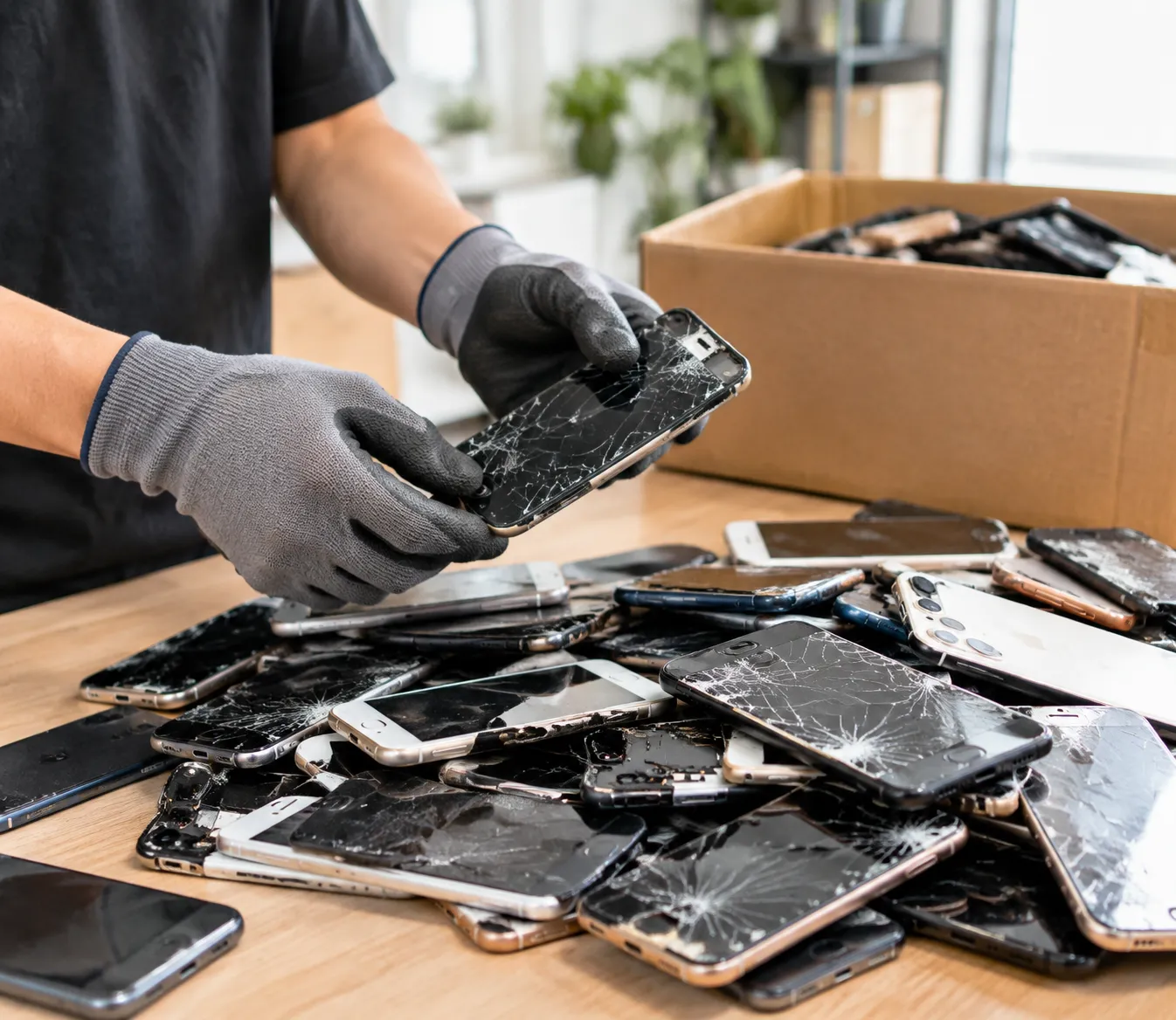
Liquidity and speed keep secondary market businesses running. When you manage repair chains, wholesale lots, or enterprise trade-ins, you need a predictable, hassle-free path to turn scrap into capital. We run our broken iPhone bulk buyback operations through a strict, transparent four-step settlement framework designed to protect your margin and eliminate post-shipment friction.
1. Manifest Submission and Upfront Valuation
A clear inventory manifest is the starting point for every profitable trade. We provide preliminary quotes based on current secondary market pricing models rather than speculative estimates.
- Detailing Lot Breakdown: Include model numbers, storage capacities, observed physical states, and screen conditions (original OLED vs. aftermarket).
- Preliminary Offer: We issue a competitive valuation matrix tailored to your volume. Check our straightforward trade intake and ordering procedures to see how we price incoming bulk stock against real-time global demand.
- Locking the Base Rate: Once we agree on initial rates based on your declared quantities, your pricing window is secured against short-term market drops.
2. Battery Safety and Secure Bulk Packaging
Shipping damaged electronics requires strict compliance, especially when handling cracked units, swollen cells, or non-functional batteries. Protecting the intact components inside is crucial for retaining value upon arrival.
- Cell Isolation: We require every device to be powered down completely. Units with compromised, punctured, or severely bloated lithium-ion batteries must be isolated in fire-retardant anti-static bags.
- Layered Shock Protection: Pack devices screen-to-back in cell dividers or dense bubble sleeves. Loose dumping in bulk cartons leads to flex-cable tears, logic board hairline fractures, and preventable grading deductions.
- Compliance Labeling: Cartons must carry appropriate UN 3481 lithium-ion handling labels. For detailed carrier protocols and international transit advice, review our dedicated shipping and payment terms to prevent transit delays.
3. Intake Diagnostic Testing and Line-by-Line Reconciliation
As soon as a shipment arrives at our facility, our technicians match your physical freight against your initial manifest. Our intake inspection eliminates the typical ambiguity found with middleman buyers.
| Diagnostic Stage | Operational Focus | What We Verify |
|---|---|---|
| Intake Logging | Barcode & IMEI registration | Confirms physical unit count against the initial bill of lading. |
| Screen Analysis | Digitizer & panel integrity | Identifies OEM reclaimable glass vs. dead OLEDs and aftermarket panels. |
| Board Testing | Current draw & boot diagnostics | Separates live logic boards from shorted units, power IC failures, and clean resets. |
| Component Audit | Housing and sub-assembly checks | Evaluates rear glass, camera modules, chassis condition, and parts harvesting yield. |
4. Audit Reporting, Variance Reconciliation, and Payout
We believe in total transparency. Nobody in the B2B smartphone liquidation space likes surprise deductions or vague “miscellaneous fees.”
- Itemized Audit Reports: You receive an item-by-item breakdown showing every verified serial/IMEI, assigned condition tier, and exact component credit.
- Variance Review: If our diagnostic findings differ from your manifest—such as an unrecorded aftermarket display or an unmentioned board short—we highlight the exact variance with visual evidence.
- Instant Payout Release: Once you approve the finalized audit sheet, payout is triggered immediately via international wire, commercial bank transfer, or standard enterprise settlement channels. Quick payouts keep your cash moving back into fresh inventory without downtime.
Common Traps in Secondary Market Liquidations
Liquidating damaged inventory carries clear financial risks when dealing with unreliable counterparties. In the secondary mobile phone market, offloading salvage inventory should generate liquidity, not unexpected write-downs. We see enterprise sellers and repair networks fall into the same costly pitfalls when arranging a broken iPhone bulk buyback.
The Bait-and-Quote Trap: Avoiding Post-Delivery Down-Grading
Unscrupulous broken iPhone lot buyers often lure sellers with inflated upfront estimates, only to slash payouts once the devices arrive at their warehouse.
- The Tactic: Initial quotes are pitched above true market rates to secure the shipment. Upon intake, buyers claim widespread display defects, board issues, or cosmetic failures that were never part of the original agreement.
- The Protection: We eliminate arbitrary down-grading by tying every transaction directly to established damaged iPhone grading standards. Clear diagnostic definitions for cracked glass, bad OLEDs, and board-level issues ensure your settlement matches the actual condition of your intake manifest.
Hidden Line-Item Deductions: Scrap Disposal Fees and Testing Surcharges
Unannounced operational fees frequently erode net margins on wholesale damaged stock. Sellers often discover deductions only after receiving their final settlement sheet.
| Deductions to Watch For | Industry Realities | Our Policy |
|---|---|---|
| Testing Surcharges | Deducting $2–$5 per unit for automated testing and triage. | Intake and diagnostics are fully included in our wholesale processing. |
| Scrap Disposal Fees | Charging waste-handling fees for BER (Beyond Economical Repair) units. | Zero scrap processing fees; salvage value is paid out, not penalized. |
| Freight clawbacks | Inflating intake logistics or inbound customs handling fees. | Transparent, pre-agreed transport terms on every B2B smartphone liquidation. |
Data Security Risks: Avoiding Uncertified Data Wiping on Enterprise Lots
Handling enterprise lots requires strict adherence to electronics asset disposition (ITAD) protocols. Handing salvage devices to brokers who lack certified wiping capabilities creates severe liability.
- Residual Data Exposure: Cracked screens or non-booting devices still contain accessible onboard NAND flash storage.
- Hardware-Level Sanitation: Every salvage device in our facility goes through factory-level sanitization and reset processes. For non-functional motherboards that cannot be software-wiped, we enforce physical destruction of the logic board to prevent proprietary data leaks before harvesting raw materials or chassis components.
Why Liquidate Bulk Salvage with HK Huading
When you offload defective inventory, you need dependable execution, competitive pricing, and fast capital return. At HK Huading, we eliminate the middlemen and operational friction from your broken iPhone bulk buyback workflow, ensuring high yields on every batch of salvage devices you liquidate.
Direct Access to Global Secondary Market Trading Channels
We operate as a direct importer, exporter, and distributor across the worldwide secondary mobile phone market. Because we do not rely on local brokers, we bypass downstream markups:
Global demand routing: We match broken lots directly with downstream processing demand across multiple international territories.
Competitive pricing models: Direct-to-source supply channels let us pay true market value for intact components, repairable boards, and raw salvage stock.
Full model coverage: We actively buy back salvage across generational releases, pricing everything from older workhorse units in the iPhone 11 series to newly released salvage units from the iPhone 16 series.
Processing Infrastructure Built for High-Volume Enterprise Shipments
Our intake facility is engineered specifically for B2B smartphone liquidation, handling large-scale commercial deliveries without processing bottlenecks.
| Enterprise Feature | HK Huading Standard | Broker / Middleman Standard |
|---|---|---|
| Intake Scalability | Multi-thousand-unit pallets processed daily | Limited bench testing capacity |
| Batch Specialization | Dedicated intake lanes for damaged, BER, and scrap | Manual, ad-hoc box sorting |
| Shipment Handling | Structured intake protocols for bulk lithium devices | High risk of lost or mixed manifests |
Transparent Diagnostic Audits with Component-Level Grading
We base our valuations on standardized device grading rather than arbitrary visual estimates. Our intake inspection audits your inventory line-by-line:
Screen recovery separation: We evaluate whether cracked assemblies retain original OEM digitizers and displays to protect your screen value.
Logic board health verification: Bootable motherboards, partial hardware failures, and non-repairable boards are categorized clearly to eliminate unjustified down-grading.
Full audit visibility: You receive a complete line-item diagnostic report before final reconciliation, matching our intake results against your initial manifest.
Fast-Turnaround Settlement Schedules to Protect Cash Flow
Salvage stock loses value sitting on shelves. We prioritize speed at every stage of the transaction to keep your operations liquid:
Rapid testing turnaround: Shipments are logged and diagnostics completed shortly after warehouse arrival.
Zero hidden fees: No administrative testing charges, scrap disposal fees, or unexpected deduction surcharges.
Reliable payment execution: Funds release immediately upon manifest agreement, giving repair networks, recyclers, and corporate liquidators immediate cash turnaround.
Frequently Asked Questions About Broken iPhone Bulk Buyback
Can I sell bulk iPhones that are iCloud locked or disabled?
Yes, we purchase disabled devices and iCloud locked iPhone salvage specifically for component harvesting, chassis reclamation, and certified materials recycling. However, clean FMI-off motherboards command a substantial premium over locked boards. When submitting your manifest, segmenting clean devices from locked inventory guarantees the most accurate initial estimate.
How much value does a working OEM display add over a defective OLED?
Intact display panels represent a major portion of cracked glass iPhone liquidation value. If the glass is cracked but the underlying OEM OLED or LCD displays zero lines, burn-in, or black spots, the unit qualifies for OEM screen reclamation pricing. Devices with bleeding pixels, touch failure, or non-original aftermarket screens lose that core display value and are priced strictly on board and housing recovery.
What is the minimum lot size required for a bulk buyback quote?
As dedicated broken iPhone lot buyers handling international B2B volume, our processing infrastructure requires a minimum intake of 50 to 100 units per shipment. This volume threshold covers the logistics, custom diagnostic testing, and line-by-line reconciliation needed to offer top-tier wholesale pricing on salvage lots, whether you are liquidating legacy trade-ins or premium flagship units like iPhone 18 Pro stock.
How long does the audit and payout process take once a shipment arrives?
Once your shipment reaches our intake facility, our inspection team completes testing and manifest reconciliation within 24 to 48 hours. We issue a detailed diagnostic report showing unit-by-unit grading and exact value metrics. Upon your review and approval of the final settlement sheet, we release your payout immediately via wire transfer or your designated settlement method.
SELL A DEVICE LOT
Have an iPhone lot to sell?
Send a model list, estimated quantity and known faults. We will review the lot before discussing terms.
See our procurement processThe form is unavailable here. Use the dedicated enquiry page or email [email protected].
Details received. Our team will review your request and reply using the contact information provided.